In this article, we will introduce the radial arm saw, a versatile and widely used woodworking tool. You will learn about its main parts, proper operation, and essential maintenance tips to achieve accurate and safe results in the workshop.
Quick Summary
A radial arm saw is a woodworking machine where a circular blade moves along an overhead arm, allowing precise crosscuts, rip cuts, miters, and dado cuts. Its main parts include the arm, motor, blade, carriage, column, table, fence, and adjustment locks.
What Is a Radial Arm Saw?
Woodworking tools are incredibly diverse, and one of the hallmarks of a professional woodworker is the ability to choose the right tool for each specific task or project.
In this article, we introduce the radial arm saw, explain its main uses, highlight key factors to consider when selecting one, and review its essential parts.
A radial arm saw is a highly adjustable woodworking tool designed for making accurate and repeatable cuts. Unlike a table saw—where the wood moves through the blade—the saw works by pulling the blade toward the operator.
This design makes it ideal for:
- Accurate crosscuts
- Smooth ripping
- Cutting long boards
- Creating dados and rabbets
- Precision angle and bevel cuts
Although newer tools like miter saws have become more common, many professionals still prefer radial arm saws because of their stability, versatility, and accuracy.
Introduction to the Radial Arm Saw
As you can see in the image below, the radial arm saw is a woodworking machine with a circular blade mounted on a sliding horizontal arm.
Lichtenberg Wood Burning eBook

Download Lichtenberg Wood Burning eBook
One of the modern techniques for creating wooden artwork is called Lichtenberg wood Burning. In this eBook, we are going to introduce this newfound art to you.
This technique is known with some different names such as Lichtenberg wood burning, fractal wood burning, and electricity wood art.
This technique should not be confused with wood burning art or pyrography. The art of pyrography on wood is the art of creating motifs and designs by burning with hot metal tools on objects such as wooden surfaces.
Lichtenberg burning is a wood-burning technique for creating designs with electricity.
This eBook is a comprehensive guide on Lichtenberg Wood Burning. All you need to know for Lichtenberg Wood Burning is here.
This is a limited-time offer, order now to get access to the future eBook releases.
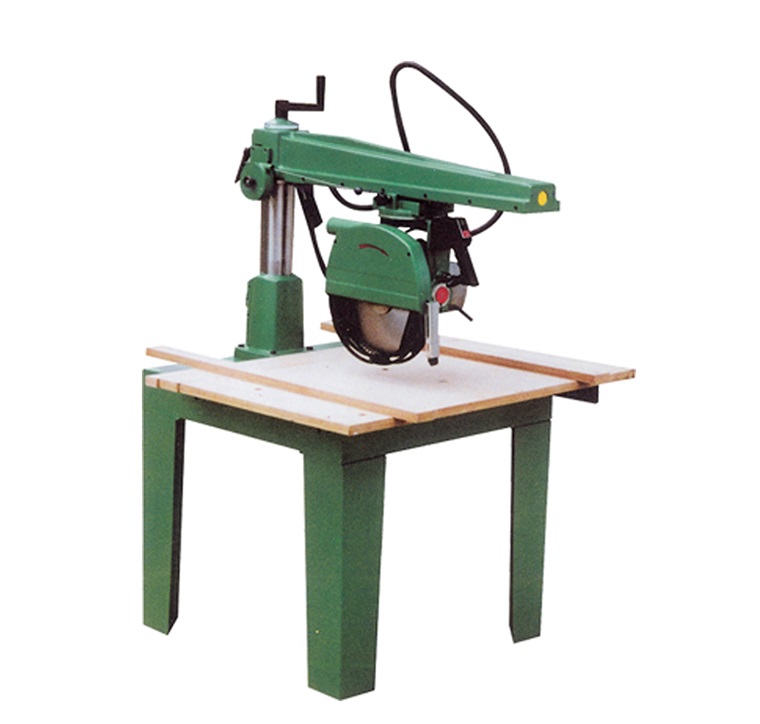
This machine is called a “radial saw” because it can make cuts along the radius of wood or wooden panels at different angles. This device is also called the sliding miter saw somewhere in the market.
It should be noted that the radial arm saw (RAS) and the sliding miter saw are two different machines, although they perform very similarly.
Main Parts of a Radial Arm Saw (Detailed)
1. Arm
The horizontal beam that holds and guides the carriage.
It allows the blade to move front-to-back smoothly.
2. Motor
Powers the blade.
Mounted on the carriage and often rotatable for rip cuts or bevel adjustments.
3. Saw Blade
A circular blade used for cutting wood, plywood, MDF, and composites.
Blades come in ripping, crosscut, and combination styles.
4. Carriage
Slides along the arm and carries the motor and blade.
Smooth sliding = accurate cuts.
5. Column (Support Post)
Vertical post supporting the arm.
Can rotate or raise/lower the arm to change cutting depth or angles.
6. Table
Flat wooden surface for placing materials.
Usually replaceable so the blade can cut slightly into it.
7. Fence
Back guide that keeps wood aligned for accurate crosscuts.
8. Adjustment Knobs & Locks
Used to change:
- Blade height
- Cutting depth
- Miter angle
- Bevel angle
These ensure precise and safe woodworking.
The Difference Between a Sliding Compound Miter Saw and a Radial Arm Saw
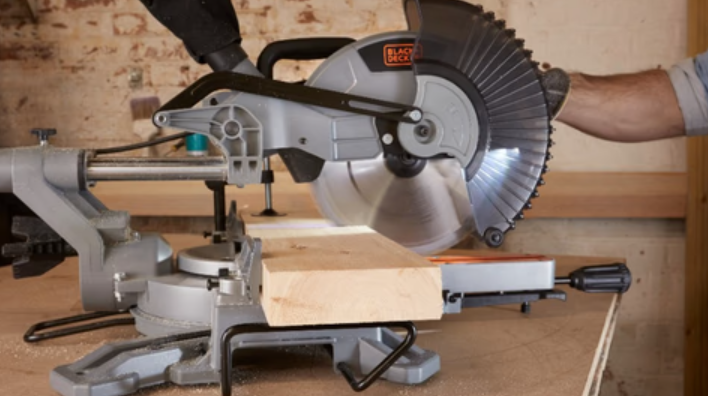
Miter saws are a family of saws very similar to radial arm saws. However, the radial arm saw (RAS) occupies a large amount of space in the workshop, while a sliding compound miter saw performs similar functions but takes up much less space.
So, what is the advantage of using a radial arm saw? In other words, what can a RAS do that a compound miter saw cannot?
Answer:
Both tools have relatively similar functions, but there are key differences. If you are an amateur woodworker and do not work on complex or specialized projects, either tool may suit your needs. However, understanding the differences between a radial arm saw and a miter saw can be helpful.
Depending on the model, a RAS usually has a much greater crosscut capacity than a sliding compound miter saw. It can cut thicker wood and wider boards. In comparison, a miter saw works best for angled cuts and offers better accuracy, making it ideal for precise mitre cuts.
For more details, see Radial Arm Saw vs. Miter Saw.
Why Radial Arm Saws Are Still Relevant
Professionals appreciate radial arm saws because:
- They provide long, straight, consistent cuts with minimal adjustment.
- The adjustable arm allows cuts that miter saws cannot achieve.
- They remain extremely reliable for heavy-duty woodworking, framing, and cabinetry.
Woodshops that focus on precision and repeatability often keep at least one radial arm saw in daily use.
Radial Arm Saw vs. Miter Saw
| Feature | Radial Arm Saw | Miter Saw |
|---|---|---|
| Crosscuts | Excellent | Excellent |
| Rip Cuts | Yes | No |
| Dado/Rabbet | Yes | No |
| Precision | High | High |
| Versatility | Very high | Moderate |
| Size | Larger | Compact |
Verdict:
If you want versatility, choose a radial arm saw.
For simple crosscuts, a miter saw is enough.
Cutting With a Radial Arm Saw Machine
One side of the workpiece must be flat and angled so it can rest on the machine table; therefore, the uneven side should be trimmed with a circular saw or floor saw.
The machine table and the side of the miter gauge must be completely clean so the workpiece sits flush on the surface without gaps and fits tightly against the gauge.
Adjust the angles of the main arm as well as the motor to the desired degree.
The blade height must be adjusted for each specific task. For example, for dado cuts, the blade should be set above the table according to the required depth. For through-cuts, the blade height must be adjusted to be two millimeters below the table surface.
Place the workpiece on the machine table and pull the saw blade back. Position the workpiece against the miter gauge and align it with the cutting line by adjusting its placement.
Press the workpiece firmly against the miter gauge with your left hand, turn on the machine with your right hand, and guide the saw blade toward the workpiece to complete the cut.
After the workpiece is fully cut, turn off the machine and remove the piece from the blade area.
For pieces that need both ends cut, first trim one end with the minimum amount of material removed (equal to one saw-blade pass), then cut the other end while keeping the same side firmly against the miter gauge.
To cut multiple pieces of equal length, use a length stop mounted on the machine’s fence. By setting it precisely, you can cut many identical pieces without relying on hand measurements, preventing operational errors.
Service and Maintenance of a Radial Arm Saw
A set of tools is required for maintaining and repairing the machine, and these must be available to the user.
The system plate (table) becomes rough over time due to blade cuts and must be replaced when worn.
The rails under the main arm must be lubricated.
The blade-angle adjustment components also need regular lubrication.
Resin buildup on the blade can be removed by brushing it with petroleum-based solvents or alcohol.
Sharpened blades should not be stacked, as contact between them can cause damage. It is recommended to store blades in a dedicated wooden holder.
After a period of use—depending on the workload and type of material—the saw blades must be replaced, and dull blades should be repaired and sharpened.
After adjusting the blade, its alignment should be checked with a dial indicator.
The bearings under the main arm, which allow the motor and blade assembly to move smoothly during cutting, must be inspected regularly.
This machine does not require a belt because it uses a direct-drive transmission system.
Safety Tips
- Always keep hands away from the blade path.
- Never pull the blade too fast—this causes climb-cutting.
- Lock all angles and adjustments before cutting.
- Use sharp, high-quality blades to reduce kickback.
- Wear eye and ear protection at all times.
Pros and Cons of Radial Arm Saws
✔️ Pros
- Extremely versatile
- Highly accurate for long cuts
- Excellent for dados and joinery
- Adjustable angles and depths
❌ Cons
- Requires more space
- Heavier than miter saws
- Needs more experience for safe operation
Common Use Cases
- Framing lumber
- Cabinet making
- Crosscutting long boards
- Cutting multiple pieces to identical length
- Dado and rabbet joinery
FAQ
1. What is a radial arm saw mainly used for?
Primarily for accurate crosscuts, dados, miters, and ripping lumber.
2. Is a radial arm saw better than a miter saw?
For versatility, yes. For quick, portable crosscuts, the miter saw is easier.
3. Are radial arm saws still worth buying?
Yes — they remain incredibly useful for workshops needing precise and repeatable long cuts.
4. Can a radial arm saw rip wood?
Yes. By rotating the motor, it can safely rip boards along the grain.
5. Is a radial saw safe for beginners?
Safe with guidance. Proper training and slow blade movement are essential.
Conclusion
Understanding the structure, function, and proper use of a radial arm saw helps woodworkers achieve cleaner, faster, and more accurate cuts. Although modern sliding compound miter saws have become more common, the saw still offers exceptional crosscut capacity and versatility—especially for wide boards and heavy-duty woodworking tasks.
With proper maintenance, regular lubrication, correct blade adjustments, and safe cutting techniques, a radial arm saw can remain a powerful and reliable tool in any workshop. Ultimately, choosing between a radial saw and a miter saw depends on the type of projects you handle, the space available, and the level of precision you need.